1. 업무 효율성 향상(High-Impact Workdays)
바쁜 것과 효율적으로 일하는 것은 다르다는 점을 강조한다. 업무의 중요도에 따라 우선순위를 정하고, 방해 요소를 줄이며, 시간뿐 아니라 에너지도 관리하는 방법을 다룬다. 직원과 관리자 등이 업무 성과와 웰빙을 함께 유지하도록 돕는 것이 목적이다.


2. 삶의 단순화(Simplify Life, One Step at a Time)
과도한 책임, 정보, 선택과 약속에서 발생하는 스트레스를 줄이는 방법을 소개한다. 물리적·디지털·정신적 공간을 정리하고 의사결정 피로를 줄여, 일상을 보다 단순하고 지속 가능하게 만드는 실천 계획을 세운다.


3. 건강하게 나이 들기(Living Well as We Age)
건강한 노화를 신체적 건강뿐 아니라 정신적·정서적·사회적 웰빙을 포함하는 평생의 과정으로 설명한다. 운동, 영양, 수분 섭취, 수면, 사회적 관계, 예방적 건강관리 등을 통해 독립성과 삶의 질을 유지하는 방법을 다룬다.


4. 실천하는 감성지능(Emotional Intelligence in Action)
자기 인식, 감정 조절, 공감, 적극적 경청과 관계 관리 등 감성지능의 핵심 요소를 교육한다. 이를 통해 직장 내 의사소통과 협업을 개선하고, 갈등이나 변화에 효과적으로 대응하도록 돕는다.


5. 직장 내 물질 사용 인식·안전·지원(Substance Use in the Workplace)
물질 사용 장애가 개인과 직장에 미치는 영향을 설명하고, 관련 징후와 오해를 바로잡는다. 낙인 없는 의사소통, 적절한 대응과 지원 자원 활용을 강조하며, 직원의 안전과 회복을 지원하는 직장 문화를 지향한다.


Personality:

  • Outgoing: 외향적인
  • Introverted: 내향적인
  • Cheerful: 쾌활한
  • Shy: 수줍음이 많은
  • Confident: 자신감이 있는
  • Easygoing: 느긋하고 편안한


Character:


  • Honesty: 정직함
  • Integrity: 도덕적 원칙을 지키는 태도
  • Responsibility: 책임감
  • Compassion: 연민과 배려
  • Courage: 용기
  • Fairness: 공정함


We often consider people with outstanding abilities to be competent. Those who solve difficult problems, achieve better results than others, and perform their responsibilities flawlessly are recognized wherever they go. However, does being highly skilled automatically make someone a great person?

What if someone, no matter how capable, refuses to admit mistakes, shifts blame onto others, and looks down on those less capable than themselves? Their individual performance may be impressive, but their colleagues will find it difficult to trust them. Ultimately, their abilities may become a source of conflict rather than a benefit to the organization.

Good character is not simply about speaking kindly or smiling at others. It is revealed in the courage to admit one's mistakes, the sincerity to celebrate another person's achievements, and the determination to uphold one's principles even in unfavorable circumstances. Such behavior requires the ability to control one's emotions, restrain one's desires, and understand other people's perspectives.

Of course, having good character does not automatically mean possessing professional expertise. Even an honest and diligent person may struggle to perform a task properly if they lack sufficient knowledge and experience. However, when character accompanies competence, individual abilities can create greater value. This is because people want more than someone who can simply do a job well; they want someone they can trust and work with.

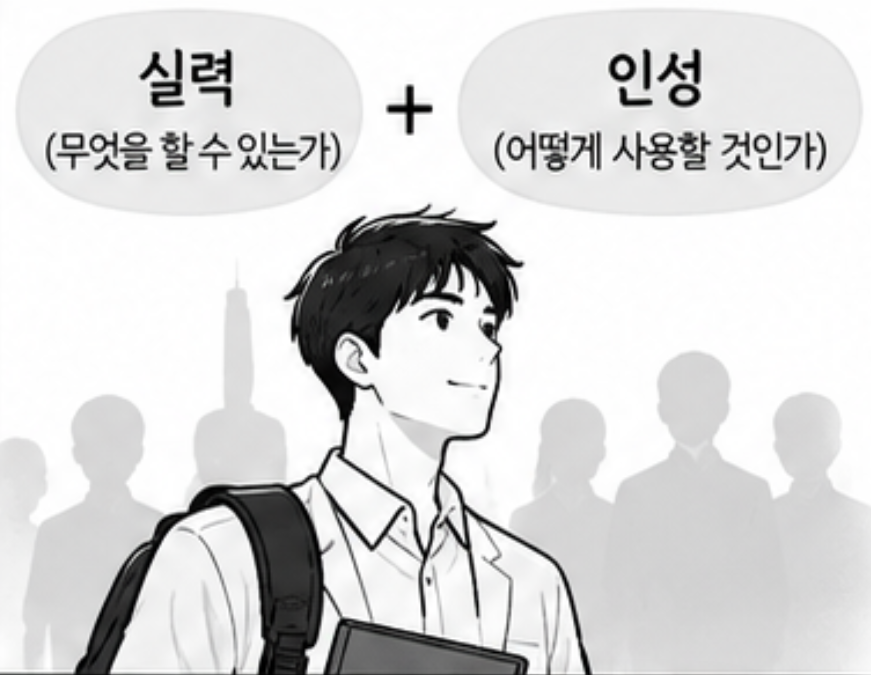
Competence shows what a person can do. Character shows how that ability will be used. Ultimately, true competence does not end with proving one's abilities. When those abilities are used responsibly and help others grow together, we can call that person not merely competent, but truly admirable.

우리는 흔히 실력이 뛰어난 사람을 유능하다고 평가한다. 어려운 문제를 해결하고, 남들보다 뛰어난 성과를 내며, 자신이 맡은 일을 완벽하게 해내는 사람은 어디에서나 인정받는다.


그러나 실력이 뛰어나다는 이유만으로 그 사람을 훌륭한 사람이라고 할 수 있을까?

아무리 능력이 뛰어나더라도 자신의 실수를 인정하지 않고, 다른 사람에게 책임을 떠넘기며, 자신보다 부족한 사람을 무시한다면 어떨까? 개인의 성과는 훌륭할지 몰라도 함께 일하는 사람들은 그를 신뢰하기 어려울 것이다. 결국 능력은 조직에 도움이 되기보다 갈등을 일으키는 원인이 될 수도 있다.


인성은 단순히 친절하게 말하거나 다른 사람에게 웃어 주는 것이 아니다. 자신의 잘못을 인정하는 용기, 타인의 성과를 진심으로 축하하는 마음, 불리한 상황에서도 원칙을 지키는 태도에 인성이 드러난다. 이러한 행동에는 감정을 조절하고, 자신의 욕심을 절제하며, 다른 사람의 입장을 이해하는 능력이 필요하다.


물론 인성이 좋다고 해서 전문적인 실력까지 저절로 갖춰지는 것은 아니다.

정직하고 성실하더라도 지식과 경험이 부족하면 맡은 일을 제대로 해내기 어려울 수 있다.

그러나 실력에 인성이 더해지면 개인의 능력은 비로소 더 큰 가치를 만들어 낸다. 사람들은 단순히 일을 잘하는 사람을 넘어, 믿고 함께 일할 수 있는 사람을 원하기 때문이다.


실력은 자신이 무엇을 할 수 있는지를 보여 준다.


인성은 그 능력을 어떻게 사용할 것인지를 보여 준다. 결국 진정한 실력은 자신의 능력을 증명하는 데서 끝나지 않는다. 그 능력을 책임감 있게 사용하고 다른 사람과 함께 성장할 때, 비로소 우리는 실력 있는 사람을 넘어 훌륭한 사람이라고 부를 수 있을 것이다.

가상 세계 virtual world
현실 reality
경계가 흐려지다 blur the boundary
인공지능 artificial intelligence
여론 public opinion
번역 메모리 translation memory
용어집 glossary

11번. 가상 세계를 대하는 태도

iCATnip 번역

You don't need to be bound by the virtual world.

더 적절한 번역

Nevertheless, we should not automatically fear the virtual world.

원문은 가상 세계에 얽매이지 말라는 뜻이 아니라, 가상 세계를 무조건 두려워할 필요는 없다는 뜻입니다.

be bound by는 무엇에 얽매이거나 제약받는다는 의미입니다.

따라서 이 문장은 원문의 의미와 다릅니다.

이처럼 번역할 때는 개별 단어보다 문장이 전달하려는 주장과 의도를 먼저 파악해야 합니다.


12번. 가상과 현실의 균형

iCATnip 번역

Importantly, not to choose any of the virtual and reality, it is the ability to understand and balance both the world.

자연스러운 번역

The important thing is not to choose between the virtual world and reality, but to understand both and use them in a balanced way.

이 문장은 문법적으로도 부자연스럽습니다.

특히 not to choose any of the virtual and reality는 영어에서 자연스러운 표현이 아닙니다.

두 가지 대상 중 하나를 선택한다는 의미로는 다음 표현을 사용합니다.

choose between A and B

예문:

  • We do not have to choose between tradition and progress.
  • We should learn to balance work and personal life.

또한 both the world도 잘못된 표현입니다. both는 두 대상을 가리키므로 both worlds라고 하거나, 이 문장처럼 both 뒤에 대상을 다시 명확하게 설명하는 편이 좋습니다.

13번. 인간의 판단 능력

iCATnip 번역

The ability of humans is more important, as the technology will diminish reality and virtual boundaries.

자연스러운 번역

As technology increasingly blurs the boundary between reality and the virtual world, human judgment becomes more important than ever.

이 문장도 의미가 달라졌습니다.

원문은 기술이 현실과 가상의 경계를 흐리게 할수록 인간의 판단 능력이 중요해진다는 뜻입니다.

그런데 diminish는 '감소시키다', '축소하다'라는 뜻입니다. diminish reality and virtual boundaries라고 하면 현실과 가상의 경계를 흐리게 한다는 의미가 명확하게 전달되지 않습니다.

이 문맥에서는 blur가 적절합니다.

또한 the ability of humans보다 human judgment 또는 our ability to make sound judgments가 자연스럽습니다.

14번. 미래 사회의 핵심 역량

iCATnip 번역

In the end, the core competence of the future society is not only the ability to use technology, but also the ability to interpret the right experience created by technology.

자연스러운 번역

Ultimately, a key skill in the future will not simply be the ability to use technology, but also the ability to interpret the experiences it creates wisely.

전체적인 문장 구조는 비교적 잘 유지했습니다.

다만 the right experience는 원문의 '기술이 만들어 낸 경험을 올바르게 해석하는 능력'을 정확하게 표현하지 못합니다.

여기서 중요한 것은 경험 자체가 옳다는 것이 아니라, 그 경험을 올바르게 해석하는 능력입니다.

따라서 interpret experiences wisely와 같은 표현이 더 자연스럽습니다.
The Blurring Line Between Virtual and Reality

Today, we live in an age when the boundary between the virtual world and reality is becoming increasingly unclear. In the past, it was relatively easy to distinguish between something we experienced in person and something we saw on a screen. However, artificial intelligence can now create images and videos so realistic that they are difficult to distinguish from reality. Virtual characters can even communicate with audiences as if they were real people.

This change brings many benefits. Virtual spaces allow us to overcome physical distances and limitations, while artificial intelligence expands opportunities for creativity and communication. People can build relationships with others they might never meet in person and explore different aspects of their identities.

However, the main problem is not that the virtual world imitates reality, but that it is becoming increasingly difficult to determine what we should believe. Manipulated videos can distort public opinion, and excessive dependence on virtual relationships may weaken our connections with people in the real world. The more emotionally convincing an experience is, the less likely we may be to question whether it is authentic.

Nevertheless, we should not automatically fear the virtual world. The important thing is not to choose between virtual and physical reality, but to understand both critically and use them in a balanced way. As technology increasingly blurs the boundary between the two worlds, our ability to evaluate information and take responsibility for our relationships becomes more important than ever. Ultimately, a key skill in the future will not simply be the ability to use technology, but also the ability to interpret the experiences it creates wisely.

오늘날 우리는 가상과 현실의 경계가 점점 흐려지는 시대에 살고 있다. 과거에는 현실을 직접 경험한 것과 화면을 통해 접한 것을 비교적 쉽게 구분할 수 있었다. 그러나 인공지능이 만든 사진과 영상은 실제와 구별하기 어려울 정도로 정교해졌으며, 가상 인물도 실제 사람처럼 대중과 소통한다.

이러한 변화는 긍정적인 측면이 있다. 가상 공간에서는 물리적 거리와 신체적 제약을 넘어 다양한 경험을 할 수 있고, 인공지능을 통해 창작과 의사소통의 기회도 넓어진다. 현실에서 만나기 어려운 사람들과 관계를 형성하거나 새로운 정체성을 탐색하는 것도 가능하다.

그러나 문제는 가상 세계가 현실을 모방한다는 사실 자체가 아니라, 우리가 무엇을 믿어야 하는지 판단하기 어려워진다는 데 있다. 조작된 영상이 여론을 왜곡할 수 있고, 가상의 관계에 지나치게 의존하면 현실의 인간관계가 소홀해질 수도 있다. 특히 감정적으로 강한 경험일수록 그것이 실제인지 확인하려는 노력이 줄어들 수 있다.

그렇다고 가상 세계를 무조건 경계할 필요는 없다. 중요한 것은 가상과 현실 중 어느 하나를 선택하는 것이 아니라, 두 세계를 비판적으로 이해하고 균형 있게 활용하는 능력이다. 기술이 현실과 가상의 경계를 흐리게 할수록, 무엇을 사실로 받아들이고 어떤 관계에 책임을 질 것인지 판단하는 인간의 능력은 더욱 중요해진다. 결국 미래 사회의 핵심 역량은 기술을 사용하는 능력뿐 아니라, 기술이 만들어 낸 경험을 올바르게 해석하는 능력일 것이다.

TOEFL Reading에서는 대학 수준의 일반 학술 어휘가 중요합니다. 단어만 외우지 말고 문장 속에서 익혀 보세요.

  1. significant — 중요한, 상당한
    The study found a significant difference between the two groups.
    → 두 집단 사이에 상당한 차이가 있었다.
  2. contribute — 기여하다
    Exercise can contribute to better mental health.
    → 운동은 더 나은 정신 건강에 기여할 수 있다.
  3. maintain — 유지하다
    It is difficult to maintain a healthy lifestyle.
    → 건강한 생활 방식을 유지하기는 어렵다.
  4. indicate — 나타내다
    The results indicate that the method is effective.
    → 결과는 그 방법이 효과적임을 보여준다.
  5. establish — 설립하다, 확립하다
    The university established a new research center.
    → 그 대학은 새로운 연구 센터를 설립했다.
  6. decline — 감소하다
    The population began to decline rapidly.
    → 인구가 빠르게 감소하기 시작했다.
  7. obtain — 얻다
    Students can obtain useful information from this report.
    → 학생들은 이 보고서에서 유용한 정보를 얻을 수 있다.
  8. require — 요구하다
    The job requires strong communication skills.
    → 그 직업은 뛰어난 의사소통 능력을 요구한다.

학습 팁: 단어 뜻을 외운 뒤 영어 문장을 소리 내어 3번 읽어 보세요.

it was good time, see ya later,

'Newyork' 카테고리의 다른 글

4:39am  (0) 2025.10.20
5:23 am Manhattan  (0) 2025.10.18
7ave 58st. 3am  (0) 2025.10.08
7ave  (0) 2025.10.06
coffee & nathan  (0) 2025.10.04

I was wondering why I am weak alone, but now I am running to the world, stronger than ever,  than anybody ever.

+ Recent posts